
Renowned for his lesson-filled stories like “The Tortoise and the Hare” and “The Boy Who Cried Wolf,” the ancient Greek fable writer’s lessons continue to ring true in the modern world
Few stories have stood the test of time quite like Aesop’s Fables. Passed down through centuries, these short, simple tales about talking animals with underlying moral lessons have shaped the way both children and adults think about right and wrong. Usually read to children as a bedtime tale, or sometimes referenced in films and literature, Aesop’s Fables have become part of our collective moral language. They teach us lessons about honesty, patience, hard work, and humility that remain just as relevant today as they were over two thousand years ago.
Who Was Aesop?
Aesop was a storyteller believed to have lived in ancient Greece around the 6th century BCE. Though little is known about his life, he is said to have been a slave who gained his freedom through his wit and intelligence. His storytelling prowess made him a figure of wisdom, and his fables were used to illustrate moral truths in ways that were both memorable and engaging. Some ancient historians, such as Herodotus, mention Aesop by name, suggesting that he was well known even in his time.
The details of his life remain shrouded in legend, with some accounts suggesting he travelled widely, sharing his tales in the courts of kings, while others view him as a symbolic figure rather than a single historical person. Regardless of his exact identity, Aesop’s name became synonymous with storytelling that captures the essence of human nature through animal characters and simple, timeless morals.
The Enduring Power of Aesop’s Fables
Aesop’s Fables encompass hundreds of short stories that explore nearly every aspect of human behaviour, including greed, deceit, arrogance, kindness, perseverance, and cleverness. Each story typically features personified animals or everyday objects, allowing readers to explore moral lessons without the weight of direct criticism.
Their beauty lies in their simplicity. The fables are concise yet profound, each ending with a clear moral such as “slow and steady wins the race” or “honesty is the best policy.” They offer gentle guidance rather than overt instruction, presenting ethical dilemmas and their consequences in ways that invite reflection rather than judgement.
These tales are adaptable too. Their messages have been reinterpreted in different eras and cultures, influencing thinkers like Socrates and La Fontaine, and even serving as political commentary in later centuries. Their universality ensures they remain relevant, no matter the audience or age.
Below is just a small sample of some of the more well known of Aesop’s Fables.
The Tortoise and the Hare
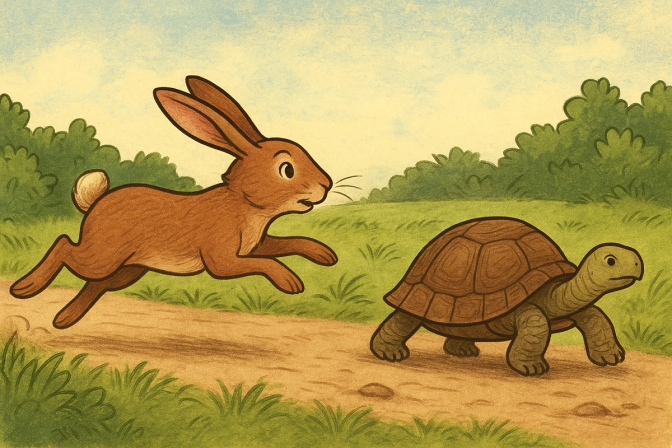
Perhaps Aesop’s most famous fable, The Tortoise and the Hare, tells the story of a slow but determined tortoise who wins a race against a boastful hare. The moral, “slow and steady wins the race,” reminds us that perseverance often triumphs over arrogance and haste. In today’s fast-paced world, this fable remains a powerful reminder that consistency and patience are often more valuable than speed and overconfidence.

The Boy Who Cried Wolf
In The Boy Who Cried Wolf, a young shepherd repeatedly lies to villagers by pretending that a wolf is attacking his flock. When a wolf eventually appears, no one believes him, and his sheep are lost. This story warns against dishonesty and the erosion of trust, an especially relevant lesson in an age of misinformation and social media, where credibility and integrity matter more than ever.
The Ant and the Grasshopper
The Ant and the Grasshopper tells of a hardworking ant who stores food for the winter while a carefree grasshopper spends the summer singing. When winter arrives, the grasshopper finds himself starving and cold. The story teaches the importance of preparation and responsibility, encouraging foresight and diligence, both values that remain crucial in personal, academic, and professional life.
The Fox and the Crow
In The Fox and the Crow, a crow perches on a tree branch with a piece of cheese in its beak. A cunning fox flatters the crow into singing, causing it to drop the cheese, which the fox promptly eats. The moral, beware of flattery, warns against vanity and gullibility. It’s a timeless reminder to think critically and not let praise cloud one’s judgement, a message as relevant in workplaces and on social media as it was in ancient Greece.
The Crow and the Pitcher
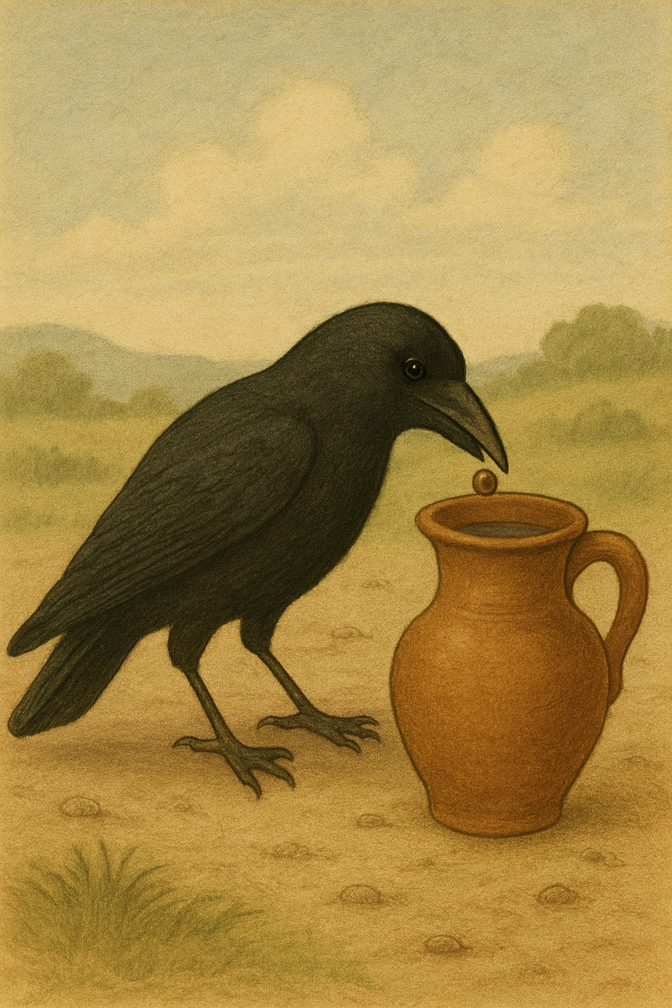
In The Crow and the Pitcher, a thirsty crow finds a pitcher with water at the bottom but cannot reach it. Instead of giving up, the clever bird drops pebbles into the pitcher until the water rises high enough to drink. This fable celebrates intelligence, creativity, and perseverance, showing that resourcefulness can solve even the toughest problems. It’s a story of innovation and patience, echoing the problem-solving spirit that drives modern progress.

Timeless Lessons for Every Generation
With humble origins in ancient Greece and now finding a global presence in classrooms, storybooks, and everyday conversation today, Aesop’s Fables have transcended cultures and generations. Their lessons on honesty, effort, humility, and wisdom continue to resonate because they capture truths about human nature that never fade.
In an age where life moves faster than ever, these fables invite us to slow down and reflect on what truly matters. They teach us through empathy, simplicity, and timeless charm. And that is why, thousands of years on, Aesop’s tales will continue to be told, retold, and cherished, reminding us that wisdom often comes in the simplest of stories.