Join us on an exploration through time as we look back at the legendary structures that shaped our fascination with the extraordinary
This will be the first in a four-part series exploring the various depictions of the Seven Wonders of the World, trawling through ancient ingenuity right up to the modern marvels
For centuries, humankind has been captivated by beauty, grandeur, and the seemingly impossible. Towering monuments and breathtaking architectural feats litter the globe, becoming tourist traps that attract thousands of people each year. Since the earliest days of civilisation, people have always sought to celebrate the most remarkable creations of their time.
The Seven Wonders of the Ancient World represent this universal admiration perfectly. They are a collection of awe-inspiring structures that defined what it meant to achieve greatness in the ancient world, and still remind us today of the incredible feats of human engineering.
The Enduring Fascination with the Number Seven
Across cultures and centuries, the idea of the “seven wonders” has endured. The ancient Greeks were among the first to categorise the most spectacular sights they encountered into groups of seven, a number they associated with perfection and completeness. Travellers, scholars, and historians alike were enthralled by the wonders they saw or heard tales of, and sought to catalogue them as a guide to the marvels of their world. These early lists became a record of human ambition and creativity, immortalising achievements that pushed the boundaries of what was thought possible.

Exploring the Wonders Through Time
This blog marks the beginning of a four-part journey through the world’s most magnificent landmarks, initially looking at the ancient masterpieces of the past and soon moving towards the modern icons of today. We will also explore those wonders that narrowly missed inclusion.
In this first instalment, we turn our gaze back thousands of years, to the civilisations that gave rise to the original Seven Wonders of the Ancient World. Though most of them have been lost to time, their stories continue to inspire architects, artists, and dreamers around the world.
The Ancient Wonders of the World
The Seven Wonders of the Ancient World are monuments to imagination and craftsmanship. The list includes the Great Pyramid of Giza in Egypt, the Hanging Gardens of Babylon in Iraq, the Statue of Zeus at Olympia in Greece, the Temple of Artemis at Ephesus in Turkey, the Mausoleum at Halicarnassus in Turkey, the Colossus of Rhodes in Greece, and the Lighthouse of Alexandria in Egypt. Of these, only the Great Pyramid of Giza still stands today, a timeless reminder of humanity’s early mastery of engineering. The others have long since disappeared, their stones scattered and their stories surviving only in texts and legends, yet their legacy endures.
The Great Pyramid of Giza, Egypt
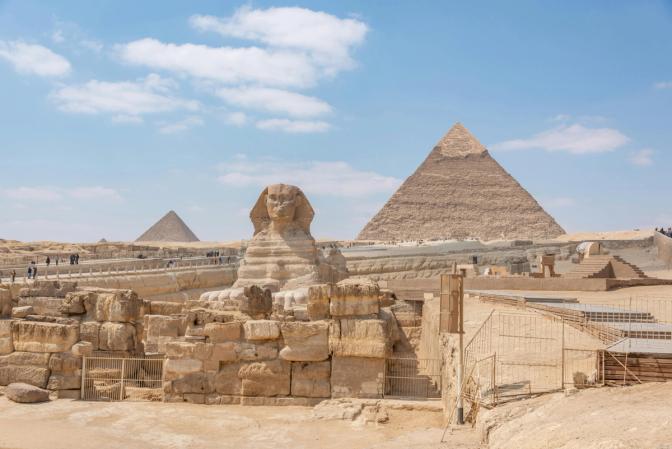
Standing proudly on the Giza Plateau just outside Cairo, the Great Pyramid of Giza is the only surviving member of the Seven Wonders, and the oldest by far. Built around 2560 BCE during the reign of Pharaoh Khufu (Cheops), the pyramid was an extraordinary feat of ancient engineering, rising to a height of 146.6 metres (481 feet). For nearly 4,000 years, it was the tallest man-made structure on Earth.
Constructed from over two million limestone and granite blocks, each weighing several tonnes, the pyramid served as Khufu’s tomb and a symbol of divine power and precision. Its alignment with the stars, its internal chambers, and the sheer scale of its construction continue to intrigue historians and archaeologists alike. Though its smooth white casing stones have long since been stripped away, the Great Pyramid remains still quite breathtaking, a nod to the genius and ambition of ancient Egypt.
There are, however, some sceptics out there who actually believe the pyramids were made by aliens, which you can read about in a previous blog on conspiracy theories. With an achievement so great, and a structure so impressive, who’s to say for certain that they’re wrong?

The Hanging Gardens of Babylon, Iraq
Perhaps the most mysterious of all the wonders, the Hanging Gardens of Babylon have long fascinated historians. Ancient writers described a series of terraced gardens filled with exotic plants and cascading waterfalls, said to have been built in the city of Babylon (modern-day Hillah, Iraq). Some accounts attribute their creation to King Nebuchadnezzar II around 600 BCE, who supposedly built them for his wife, Queen Amytis, to remind her of the lush green hills of her homeland.
Despite the stories and rumours, no definitive archaeological evidence of the Gardens has ever been found, leading some scholars, such as Oxford’s Stephanie Dalley, to suggest they may have been located in Nineveh instead, constructed by the Assyrian King Sennacherib. The mystery only adds to their allure, an ancient paradise suspended between legend and history, a masterpiece of love, innovation, and engineering that continues to captivate the imagination.


The Statue of Zeus at Olympia, Greece
In the sacred sanctuary of Olympia, home of the ancient Olympic Games, stood a colossal statue of Zeus, the king of the Greek gods. Created by the master sculptor Phidias around 435 BCE, the statue was crafted from ivory and gold-plated bronze, seated upon a grand throne decorated with precious stones and carvings. Standing over 12 metres tall, the statue was said to fill the temple so completely that it almost touched the ceiling.
The Statue of Zeus was a captivating artistic achievement and a symbol of divine majesty and the spiritual heart of ancient Greece. Sadly, it was destroyed in the 5th century CE, likely in a fire. Yet its reputation lived on through countless descriptions, artworks, and the enduring mythos of Greek civilisation.

The Temple of Artemis at Ephesus, Turkey
Located in the ancient city of Ephesus, near present-day Selçuk in Turkey, the Temple of Artemis was one of the grandest temples ever built. Dedicated to the Greek goddess of the hunt, the moon, and fertility, it was first completed around 550 BCE and later rebuilt after being destroyed by fire. The temple’s marble columns, numbering over 120 and each standing nearly 20 metres tall, made it an architectural marvel admired by visitors from across the ancient world.
The temple served as a place of worship, alongside being a cultural and commercial hub, drawing pilgrims, merchants, and artisans. It was finally destroyed by the Goths in 262 CE, and its ruins were later scavenged for building materials. Today, only fragments remain, but its legacy continues as one of antiquity’s most breathtaking achievements.


The Mausoleum at Halicarnassus, Turkey
Commissioned by Queen Artemisia II to honour her late husband, Mausolus, ruler of Caria, the Mausoleum at Halicarnassus (modern-day Bodrum) was a striking blend of Greek, Egyptian, and Lycian design. Completed around 350 BCE, it stood approximately 45 metres high and was adorned with elaborate sculptures and reliefs by the finest artists of the era.
The Mausoleum was so iconic that the very term “mausoleum” has since come to mean any grand tomb. Though it was destroyed by earthquakes during the Middle Ages, fragments of its sculptures survive in the British Museum, offering a glimpse of the artistry and devotion that defined one of the world’s greatest funerary monuments.
The Colossus of Rhodes, Greece
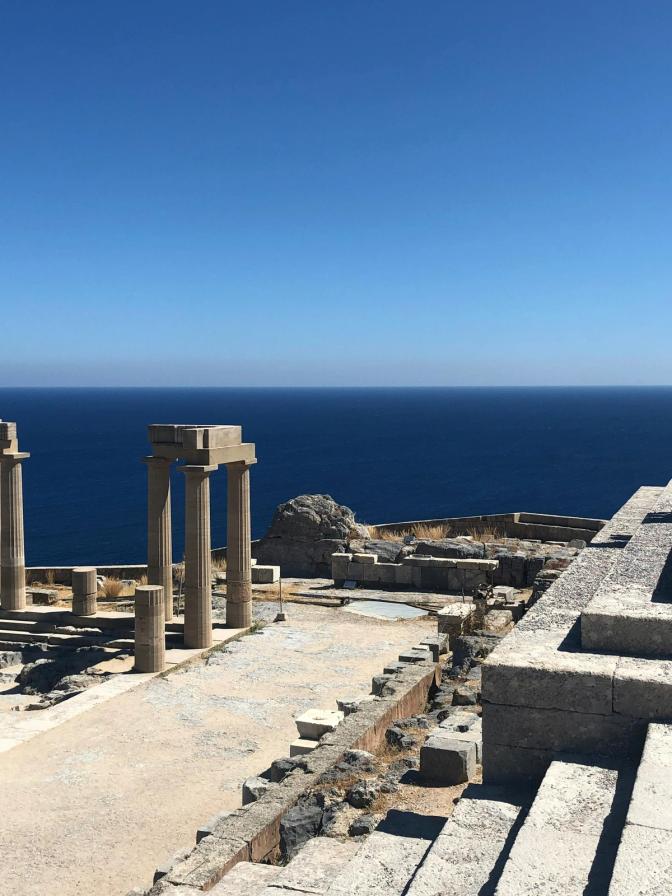
Built to celebrate Rhodes’ victory over the invading forces of Demetrius Poliorcetes in 305 BCE, the Colossus of Rhodes was a towering statue of the sun god Helios, crafted by the sculptor Chares of Lindos. Standing an estimated 33 metres tall, which is roughly the height of the Statue of Liberty’s pedestal, it was constructed from bronze plates over an iron framework and stood near the island’s harbour.
Though it stood for only 56 years before being destroyed by an earthquake, the Colossus became a symbol of resilience and pride. Its image as a guardian at the harbour entrance inspired artists for centuries and has become an enduring symbol of triumph and ingenuity in the ancient world.

The Lighthouse of Alexandria, Egypt
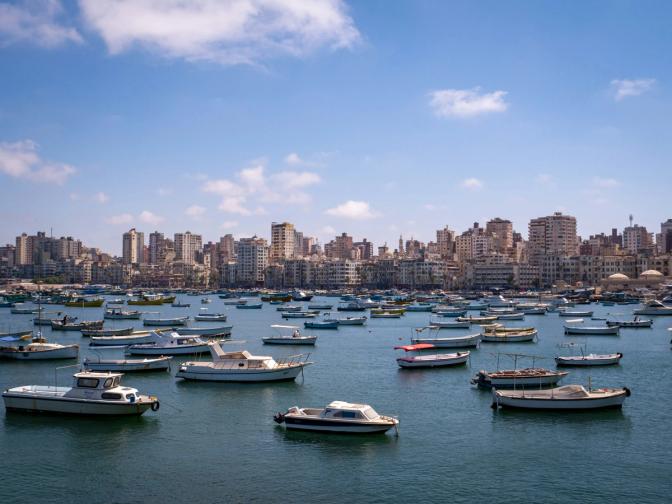
Perched on the island of Pharos near the ancient city of Alexandria, the Lighthouse of Alexandria guided sailors safely into one of the busiest ports of the ancient world. Completed around 280 BCE during the reign of Ptolemy II, the lighthouse stood between 100 and 130 metres tall and was one of the tallest structures ever built in antiquity.
Constructed from light-coloured stone, the tower was said to have three tiers and a massive mirror at the top that reflected sunlight by day and firelight by night. For over a millennium, it stood as a symbol of knowledge and discovery, until it was eventually destroyed by a series of earthquakes between the 10th and 14th centuries. Its influence endures in the very word “pharos,” now used in many languages to mean lighthouse.

The Legacy of the Ancient Wonders
The Seven Wonders of the Ancient World may have been born of myth and marble, but their spirit lives on in every architectural and artistic triumph that has followed. They remind us of humanity’s endless desire to build, create, and leave behind something extraordinary.
In the next part of this series, we’ll step into the modern age to explore the Seven Modern Wonders of the World, iconic landmarks that continue the ancient tradition of awe, innovation, and inspiration, highlighting the incredible things that humankind can achieve.