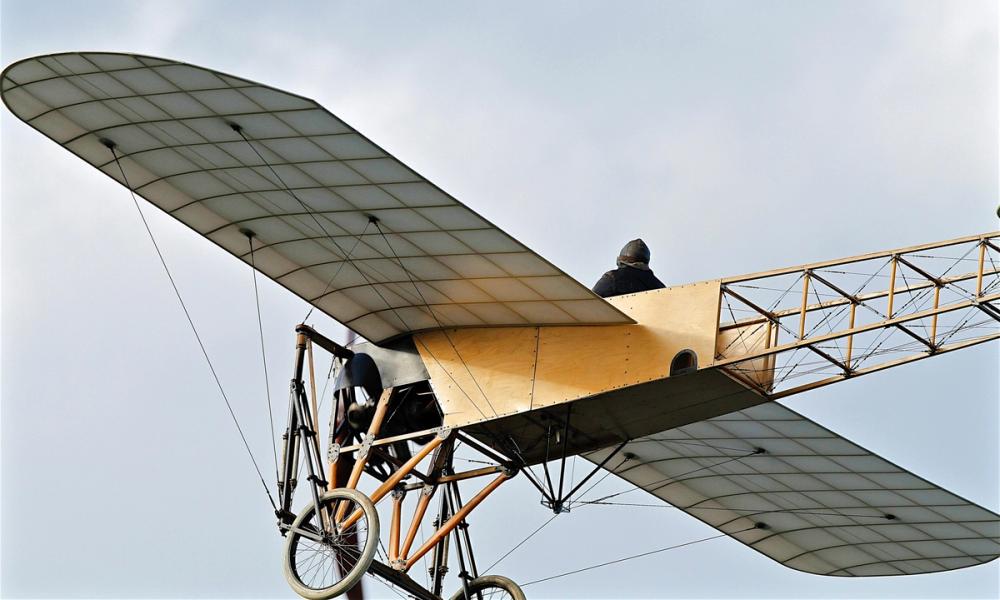
Two bicycle mechanics from Dayton, Ohio, changed the course of history on December 17th, 1903, with the world’s first powered flight, opening the skies and transforming how humanity connects, explores, and dreams
In the modern age of technology and internet speeds that are faster than ever, you can travel virtually from New York to Dublin to Dubai, and everywhere in between, in the blink of an eye. Whilst the same can’t be said exactly for physically travelling great distances, long-haul journeys have certainly become more comfortable and efficient over the last few decades. But, air travel is still a relatively new idea, with the first passenger and commercial airline only established in 1914, and only carrying one passenger on its first flight from St. Petersburg in Russia to Tampa, Florida, in the USA.
Fast forward over a hundred years, and it has never been easier to book a flight going from nearly anywhere to nearly anywhere else. Simply jump onto Skyscanner, select your destination, and within a few short minutes, your flight is booked and ready to go. That wasn’t always the case, and without the inventive minds of the Wright brothers, the world as we know it might look very different from what it is today.
12 Seconds That Changed Everything
The history of the first aeroplane’s design is an intriguing one. On a cold and windy morning on December 17th, 1903, at a remote stretch of sand in Kitty Hawk, North Carolina, the impossible happened. Orville Wright, watched by his brother Wilbur, took to the air in a fragile wooden craft that stayed aloft for just 12 seconds and travelled a mere 36.5 metres. What a lot would consider a meagre attempt by today’s standards, those few seconds marked one of the greatest leaps in human history, becoming the moment mankind broke free from the ground and learned to soar amongst the clouds.
It’s almost poetic that two self-taught inventors, not engineers by profession but bicycle makers by trade, were the ones to make it happen. Since 1899, Wilbur and Orville Wright had been quietly experimenting with flight, working in near obscurity while better-funded contemporaries like Samuel Langley of the Smithsonian basked in public attention. But the Wrights had something Langley and others didn’t, the belief that flight couldn’t be achieved through brute force alone. “It is possible to fly without motors,” Wilbur once said, “but not without knowledge and skill.”


Resolve and Passion to Succeed
Their approach was methodical, humble, and revolutionary. From their shop in Dayton, they built gliders, tested designs in their homemade wind tunnel, and mastered the art of flying long before adding an engine. They learned through trial and error, undertaking more than a thousand glides from the sandy slopes of Kill Devil Hills, and gradually cracked the secret to controlled flight.
The breakthrough came when they realised that stability and control were just as crucial as lift and power. Inspired by birds, they devised a system called “wing-warping,” allowing pilots to twist the wings and steer mid-air. When it came time to add power, they even built their own lightweight engine and propeller, which was the first of its kind designed for efficient flight.
The Moment of Truth
On that fateful December morning in 1903, it was Orville’s turn to take the controls. As the Flyer rumbled down its wooden launch rail and lifted off, a volunteer snapped the now-iconic photograph of Wilbur running beside it. The flight was brief, bumpy, and utterly magnificent. Over the course of the day, the brothers made four flights, each one a little longer, a little steadier, and infinitely more historic.
The world, however, was slow to catch on. At first, few believed their claims. Newspapers dismissed the reports as fanciful, and the scientific establishment doubted two unknown mechanics could have achieved what generations of scholars had failed to do. But as their flights became longer and more controlled, with the later Wright Flyer III flying 24 miles in 1905, disbelief turned into astonishment. Humanity had entered a new era.
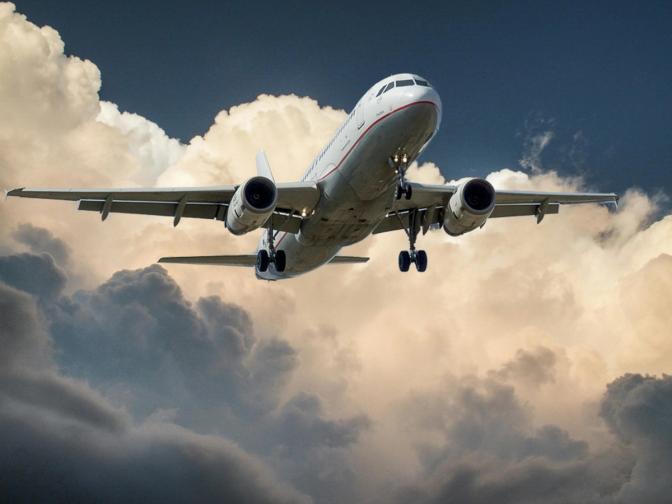
Their achievement was a revolution in how the world moved, connected, and dreamed. The Wright brothers’ work sparked the dawn of aviation, transforming travel from a local affair to a truly global experience. In the decades that followed, aeroplanes would shrink continents, bridge cultures, and make the world feel smaller and more accessible than ever before. What began as a 12-second hop would one day evolve into transatlantic flights, supersonic jets, and missions to the edge of space.

Try, Try, and Try Again
Yet, behind their genius was also a story of perseverance and partnership. The Wrights faced countless failures, mechanical breakdowns, and even crashes. But they never gave up. Their sister, Katharine Wright, played an unsung but vital role, managing the finances, operations, and even helping build the Flyer itself. It was a family affair built on resilience and faith in a dream that many thought foolish.
By the time Wilbur and Orville demonstrated their aircraft publicly, the world had changed forever. Aviation became a symbol of human progress, filled with imagination, engineering, and possibility. Now, every flight today traces its lineage back to that windy morning in Kitty Hawk.
So, as we approach the 122nd anniversary of that first flight on 17 December, take a moment to look up the next time you see an aeroplane tracing its silver path across the sky. Remember the two brothers who dared to dream and then built wings to make it real.

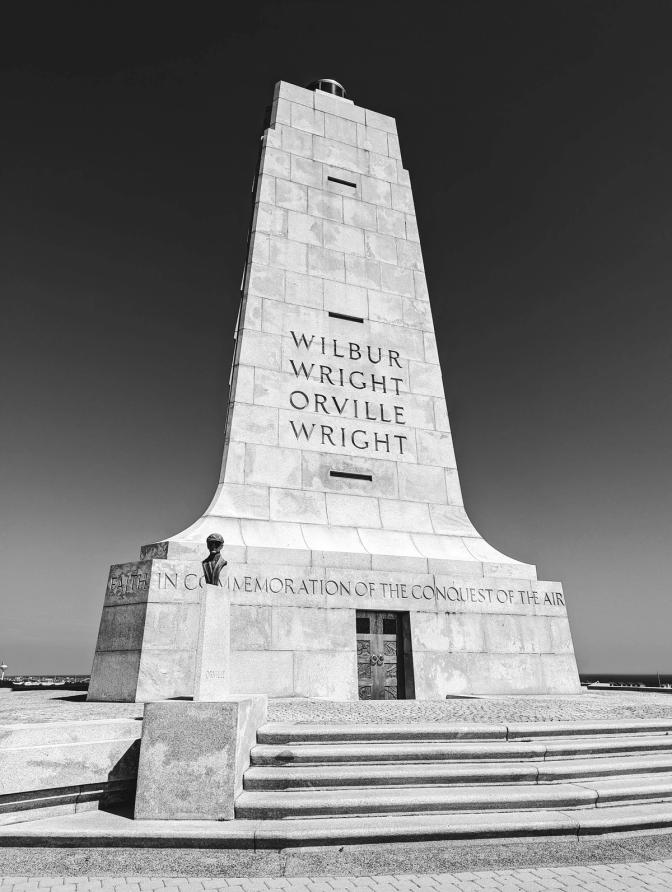
Because of the Wright Brothers, the world became smaller, faster, and infinitely more connected. They also taught us that no dream is too high to reach.
Thanks to Wilbur and Orville Wright, the sky is no longer the limit, it is only the beginning.