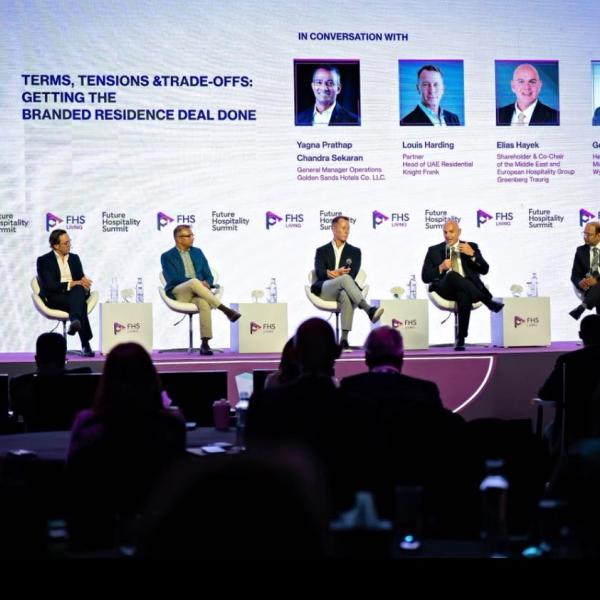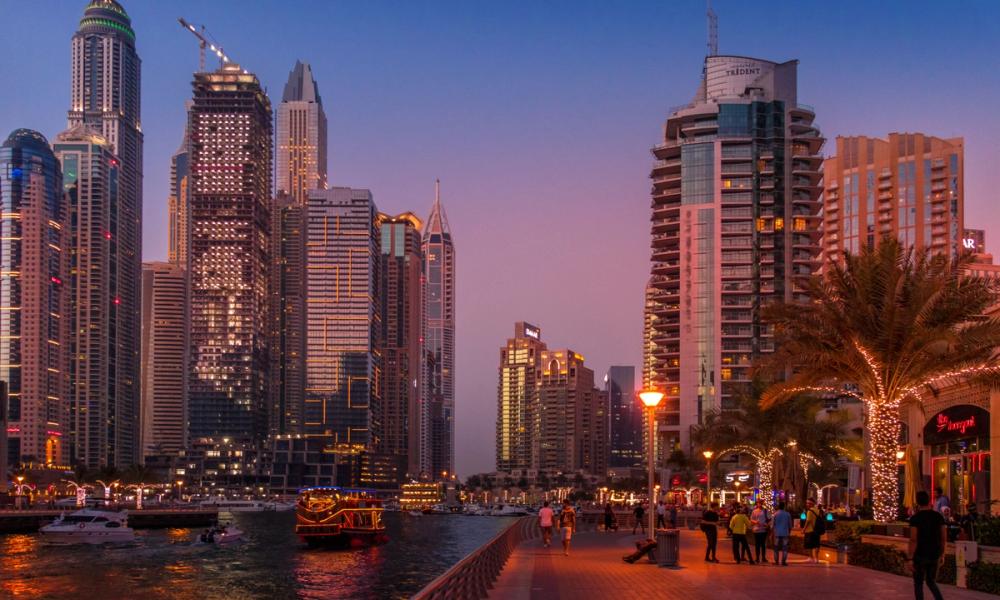
Last week’s Future Hospitality Summit in Dubai highlighted how branded residences are evolving beyond luxury names and premium finishes, with hospitality, community, wellness, technology, and long-term management becoming increasingly important to the value of a home
Branded residences have recently become one of the most closely watched areas of hospitality and real estate, particularly in Dubai, where the market has developed at remarkable speed. But as supply increases and consumer expectations become more sophisticated, the question is changing, with more people looking at what that brand actually delivers once the keys have been handed over.
In our previous blog looking at FHS, we discussed the wider themes that emerged from FHS World 2026, including the growing importance of flexible living, community, technology, and wellness across hospitality. The topic of branded residential featured an amalgamation of all these topics, offering a closer look at how the relationship between hospitality and home is changing.
The brand is only the beginning
One of the clearest messages from the summit came from Jeff Tisdall of Accor One Living, who said, “The brand is simply no longer enough. If it ever was, it’s not today.”
That shift is important. A branded residence needs to function as a genuine private home, with the privacy, flexibility, and sense of ownership that residents expect, while also providing access to a high level of hospitality and service. A recognisable name can create initial appeal, but it cannot carry the entire proposition.
The strongest developments are therefore being built around the experience that sits behind the brand. Authentic hospitality operations, consistent service standards, resident programming, community spaces, and long-term stewardship all contribute to whether a branded residence continues to feel valuable years after launch.
Dubai is at the centre of a rapidly expanding market
Dubai was repeatedly highlighted at FHS as the global epicentre of branded residences, supported by its international connectivity, mobile wealth, favourable tax environment, and growing population of ultra-high-net-worth individuals.
The numbers underline just how quickly the sector is developing. Nearly 2,000 branded-residential projects have now been completed or entered the global pipeline, while a record 311 projects were signed or delivered in the past year. In MENA, the pipeline is forecast to grow by 249% over the next five years, roughly twice the expected global rate.
There is also a significant financial incentive behind the model. The average global price premium for branded residences is estimated at 44%, rising to 57% in resort locations. But with more supply entering the market, that premium cannot be taken for granted. As Riyan Itani noted during the summit, the sector is accelerating, not simply growing, meaning brands will increasingly need to demonstrate why their involvement creates genuine value.
The hotel can become the heart of the development
Another important discussion at FHS centred on the role of the hotel within a mixed-use development. A hotel, residences, restaurants, wellness facilities, retail, and other amenities shouldn’t be treated as separate components, with the strongest projects beginning to view them as one connected ecosystem.
The hotel can provide much of the operational infrastructure behind that ecosystem, including hospitality talent, service expertise, food and beverage, wellness, events, and resident programming. It can also give homeowners access to a wider range of services while creating more activity across the development.
This has implications well before a property opens. Operators need to be involved during the design stage so that the hotel and residential components work together from the outset. Service routes, amenities, governance, staffing, commercial structures, and resident access all need to be considered as part of the same experience.
The result should feel less like a collection of separate businesses sharing one address and more like a single, well-run destination.

Branded living is becoming more flexible
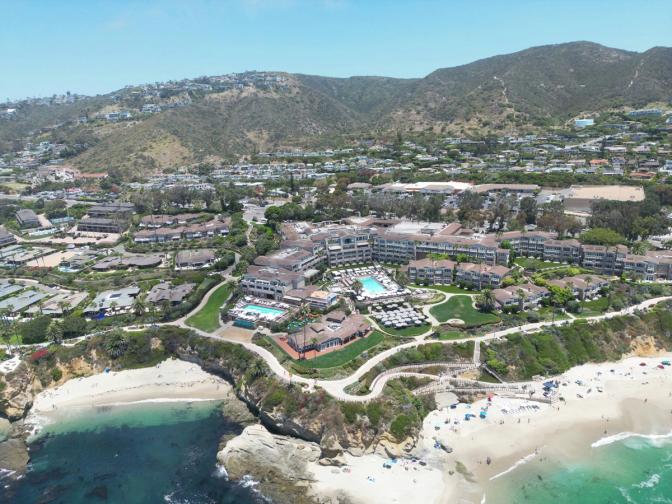
The branded-residential market is also moving beyond the traditional image of an ultra-luxury apartment. FHS highlighted growing demand for serviced apartments, extended-stay accommodation, co-living, and other flexible formats that respond to changing lifestyles.
Legacy Hotels Holding and Tulip Hotel & Residences, for example, discussed the growing appeal of larger rooms, kitchenettes, and longer-stay functionality, reflecting demand from residents who want more flexibility in how they use their homes.

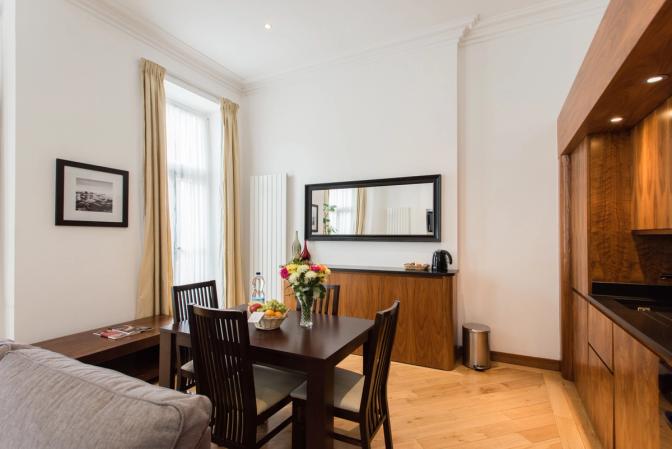
Radisson also highlighted opportunities in serviced apartments and branded residences across the upscale and upper-upscale segments, alongside greater flexibility in the commercial structures used to operate them.
Ascott’s lyf concept takes the idea even further, featuring hotel, serviced residence, residential, and co-living models. Its approach also demonstrates how shared spaces can become valuable commercial assets. Lobbies, lounges, workspaces, and event areas can generate revenue while encouraging residents and guests to interact.
The broader lesson is that for branded residential, the opportunity lies in creating the right combination of privacy, service, and flexibility for the people who will actually use the space.
Community is becoming part of the value proposition
Luxury residential has traditionally placed significant emphasis on the quality of the home itself. Increasingly, however, the wider community is becoming just as important.
Residents want spaces where they can socialise, work, exercise, and spend time outside their own homes. Events, wellness facilities, shared lounges, and community programming can all contribute to a stronger sense of belonging, while also giving developments more reasons for residents to remain engaged with the property.
Wellness is becoming particularly important within this ecosystem. Fitness, recovery, nutrition, preventative health, and longevity are moving beyond standalone hotel amenities and becoming part of the everyday residential experience.
The same principle applies to workspaces. Koffiacy’s contribution at FHS demonstrated how hospitality-led thinking can be applied to flexible work environments, using service, design, and recurring revenue models to create spaces that are useful throughout the day.
For developers, this opens up an interesting opportunity. The value of a residence increasingly comes from the quality of the ecosystem around it.
Technology needs to be built into the experience
Technology is another area where expectations are changing. Smart-home features and digital services can no longer be treated as optional extras added towards the end of a development.
The most effective technology should be almost invisible to the resident, making everyday life simpler. Digital concierge services, connected homes, smart access, and security, personalised communications, amenity booking, and integrated wellness services can all contribute to this.

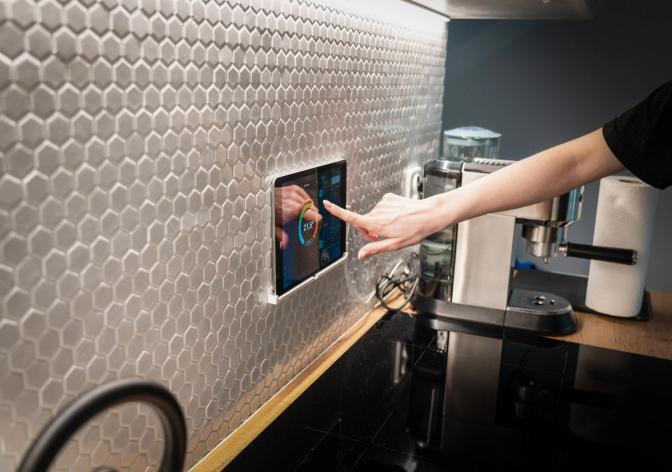
The key is to start with the resident experience. Developers and operators need to establish what residents should be able to do easily, then design the technology and infrastructure required to make that possible.
As branded residences become more operationally sophisticated, data will also play a greater role. Understanding how residents use amenities, services, and shared spaces can help operators improve the experience while making better use of the wider asset.
The commercial model matters as much as the concept
Behind the lifestyle proposition is a more complicated commercial question. Branded residences cannot all be structured in the same way, and the right model will depend on factors including location, regulation, product tier, brand strength, and the responsibilities of each party.
Discussions at FHS touched on rental programmes, commercialisation rights, management, and franchise structures, owner usage, governance, service obligations, and brand continuity.
There is also a clear shift in what owners and investors expect from their partners. Pure fee collection is becoming less compelling, with greater interest in flexible structures that align incentives and create a clearer commercial upside for all sides.
That means developers, brands, operators and investors need to establish how they will work together well before launch. The commercial model needs to support the experience being promised, while giving each party a clear role in protecting the long-term value of the asset.
The real test comes after handover
For all the attention that branded residences receive during their launch, the most important period arguably begins once the development is complete. Selling the residences is one measure of success, but it does not prove that a brand has created lasting value. That will ultimately depend on the quality of management, resident satisfaction, service consistency, and the performance of the property in the secondary market.
Homeowners' association governance, reserve planning, maintenance, capital expenditure, and long-term stewardship all play a role. If services deteriorate or common areas are poorly maintained, the premium attached to the brand can quickly become harder to justify.
The resale market will therefore be an important test for the sector. A development that continues to command a premium years after completion demonstrates that the brand has become part of a genuinely valuable living experience. One that struggles to maintain its premium may suggest that the initial value was driven more by marketing than by the quality of the proposition.
What comes next for branded residential?
The next generation of branded residences is likely to look increasingly different from the developments that established the category. Hotels, homes, wellness, retail, workspaces, and community facilities will become more closely connected, creating true hospitality-led ecosystems.
For Dubai, where the market is expanding rapidly, this creates significant opportunity alongside greater competition. As more projects enter the pipeline, the brands that stand out will need to offer something more substantial than recognition alone.
The strongest developments will give residents the privacy of a home, the service of a hotel, and the benefits of being part of a well-managed community. They will use technology to make life easier, wellness to support better living, and flexible spaces to respond to how people actually spend their time.
The future of branded residential, then, is not really about putting a famous name on a building. It is about creating a living experience that continues to justify that name long after the launch campaign has ended.